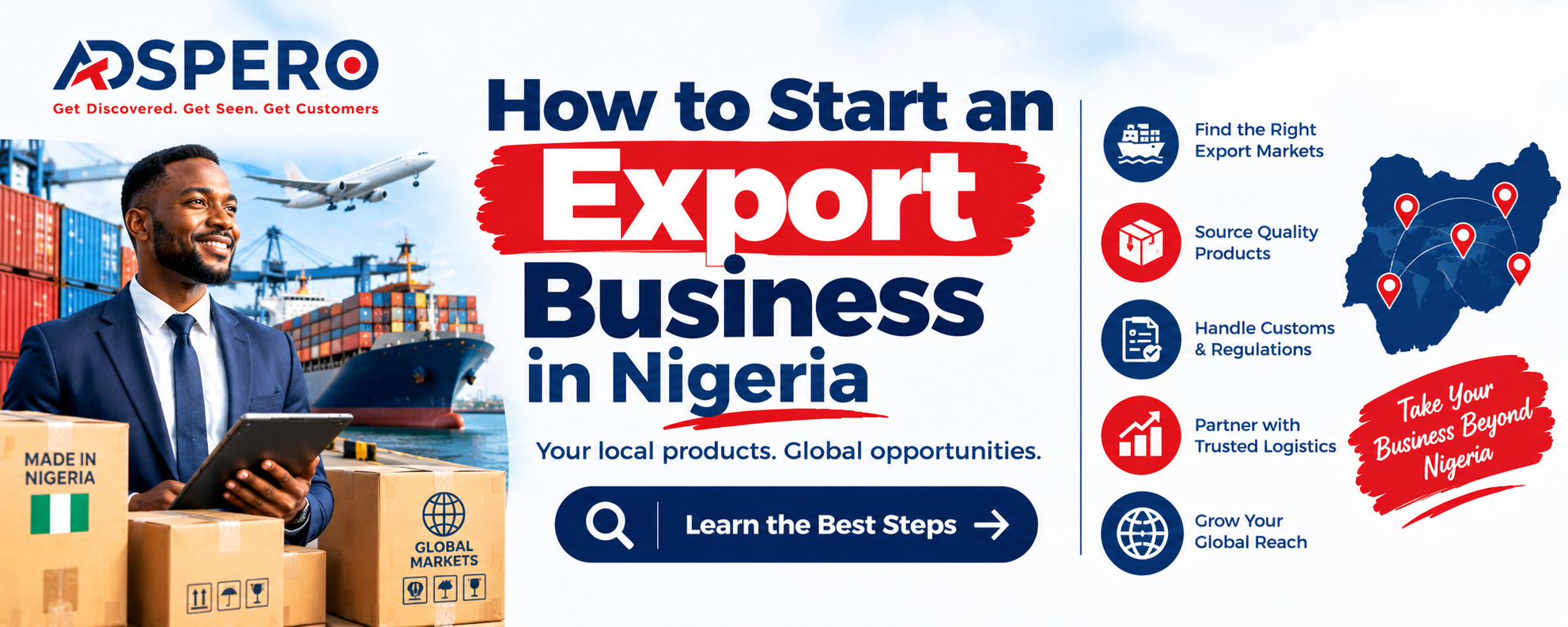
How to Start an Export Business in Nigeria
Starting an export business in Nigeria can help entrepreneurs connect local producers with buyers in international markets. From agricultural commodities and processed foods to solid minerals, manufactured products and creative goods, Nigerian businesses can explore opportunities to sell suitable products beyond the domestic market.
However, successful exporting requires more than finding a buyer abroad. Exporters must understand product demand, quality standards, pricing, documentation, logistics and the regulations that apply to their goods and destination markets.
This guide explains how to start an export business in Nigeria, choose products, identify international buyers, calculate costs and build relationships that can support long-term growth.
What Is an Export Business?
An export business sells goods produced, processed, sourced or manufactured in one country to customers in another country. A Nigerian exporter may sell directly to an overseas retailer, distributor, manufacturer, wholesaler or individual buyer.
Some exporters purchase goods from local producers and supply international customers. Others help producers find buyers and earn an agreed commission. The right business model depends on your capital, industry knowledge, supplier relationships and access to overseas markets.
1. Choose Your Export Business Model
Before investing in products, decide how you want to participate in the export market.
Direct Exporting
You source or produce goods in Nigeria and sell them directly to customers in another country. This model gives you control over customer relationships and pricing, but you are responsible for managing the export transaction.
Export Trading
You source products from local farmers, manufacturers or suppliers and resell them to international buyers. Your success depends on sourcing quality goods at prices that leave enough room for logistics and profit.
Export Brokerage
You connect Nigerian suppliers with international buyers and earn a commission under an agreed arrangement. This model may require less inventory capital, but it depends heavily on trust, accurate information and clear agreements about your role and compensation.
Value-Added Exporting
You process, package or improve locally sourced products before selling them overseas. Value addition can differentiate your offer, although it may introduce extra production, packaging, certification and quality-control requirements.
2. Identify Products With Export Potential
Product selection should begin with international demand rather than assumptions about what foreign buyers want. Research the destination market, competing suppliers, required product specifications and the costs of delivering the goods.
Categories worth researching include:
- Agricultural commodities and selected food ingredients.
- Processed agricultural products and packaged foods where permitted.
- Cocoa and related products.
- Sesame seeds and other agricultural commodities.
- Cashew nuts and suitable processed nut products.
- Textiles, clothing and fashion-related products.
- Handcrafted products, artwork and selected locally made goods.
- Manufactured products and industrial supplies.
These categories are starting points for market research, not a guarantee that every product is profitable or eligible for export. Some goods may be subject to restrictions, special approvals, quality standards or additional documentation.
How to Evaluate an Export Product
- Identify countries where buyers purchase the product.
- Research import demand, competing suppliers and typical specifications.
- Confirm that the product can legally be exported from Nigeria and imported into the destination country.
- Identify reliable local producers or suppliers.
- Request quotations and confirm whether the supplier can meet the required quantity and quality.
- Calculate packaging, transport, inspection, documentation and shipping costs.
- Compare your final offer with competing suppliers.
3. Research Your Target International Market
Different countries have different consumer preferences, import rules, labelling requirements and commercial practices. A product that sells well in one market may face limited demand or additional compliance requirements in another.
Start by selecting one or two target markets rather than trying to serve every country immediately. Research the types of buyers in those markets and understand what they value most, such as product consistency, certification, traceability, packaging, delivery reliability or competitive pricing.
Useful research sources may include trade associations, industry reports, international trade events, business directories, official trade information and direct conversations with prospective buyers.
4. Find Reliable Nigerian Suppliers
If you are not producing the goods yourself, supplier selection is critical. International buyers expect exporters to deliver the agreed quantity, quality and specifications consistently.
Potential sources include farms, agricultural cooperatives, processors, manufacturers, established wholesalers and industry associations.
Before entering an agreement, consider the following checks:
- Verify the supplier's identity and business details.
- Inspect the goods or arrange an appropriate quality inspection.
- Confirm available quantities and future production capacity.
- Request product samples where practical.
- Establish packaging, grading and product specifications in writing.
- Confirm the supplier's ability to meet agreed timelines.
- Agree on payment terms and procedures for defective or non-conforming goods.
For agricultural products, assess seasonality, storage conditions, moisture levels, contamination risks and consistency where relevant. For manufactured goods, confirm materials, dimensions, performance requirements and applicable standards.
5. Understand Export Registration and Compliance
Export requirements depend on the product, transaction and destination country. Before accepting an order, determine which registrations, permits, inspections, certificates and documents apply to your particular shipment.
The Nigerian Export Promotion Council is an important starting point for information about non-oil export development and exporter support. The Nigeria Customs Service provides information relevant to customs procedures, while other agencies may oversee specific product categories.
Depending on what you export, you may need to investigate requirements involving product standards, food safety, plant or animal health, origin documentation, regulated commodities and destination-country import rules.
Do not assume that the requirements for exporting one product apply to another. Confirm current procedures with the relevant authorities, your freight forwarder or a qualified customs and trade professional before shipping.
6. Find International Buyers
Finding genuine buyers is one of the most important parts of building an export business. You need a clear offer, reliable product information and a way for overseas customers to assess your credibility.
Business-to-Business Marketplaces
International business marketplaces can help exporters research buyers, distributors and wholesalers. Verify potential trading partners independently before sending samples, sharing sensitive commercial information or accepting unfamiliar payment arrangements.
Trade Exhibitions and Industry Events
Relevant trade fairs and industry events can help you meet importers, purchasing managers and distributors. Prepare a product catalogue, specification sheet, pricing structure and clear contact information before attending.
Direct Business Outreach
Identify companies that already buy or distribute products similar to yours. Contact their procurement teams with a concise introduction, product details, available quantities, indicative pricing and evidence of your ability to supply.
Online Business Visibility
A professional online presence helps international prospects learn about your company and assess your offer. Maintain consistent business details, publish accurate product information and make it easy for prospective buyers to contact you.
Adspero is a hybrid customer acquisition and business visibility platform that helps businesses get discovered through business listings, SEO-focused visibility and advertising opportunities. Visit Adspero.com to discover businesses and services across Nigeria and explore online visibility opportunities.
7. Prepare a Professional Export Offer
International buyers need more than a product photograph and a price. A clear export offer should provide enough information for them to assess whether your business can meet their requirements.
Include the following details where applicable:
- Product name and detailed specifications.
- Available quantity and supply capacity.
- Packaging, grading and quality information.
- Country of origin.
- Minimum order quantity.
- Price, currency and what the quotation includes.
- Production or preparation lead time.
- Shipping options and proposed delivery terms.
- Relevant certificates and supporting documentation.
- Payment terms and quotation validity period.
Only state certifications, production capacity or quality claims that you can substantiate. Accurate information builds confidence and reduces misunderstandings during negotiations.
8. Calculate Your Export Costs and Profit
Export pricing must account for the expenses involved in sourcing, preparing and delivering the goods. A price that looks competitive at the supplier's premises may become unprofitable after transport and export-related costs are included.
Your calculation may include:
- Product purchase or production cost.
- Processing, grading and packaging.
- Transport from the supplier to the warehouse or port.
- Inspection, testing and certification where required.
- Applicable documentation and export-related charges.
- Freight, insurance and handling.
- Banking, payment processing and currency conversion.
- Storage, administrative expenses and a contingency allowance.
Illustrative Export Profit Calculation
Imagine that sourcing and preparing a shipment costs ₦2,000,000. Packaging, transport, inspection, documentation and other transaction expenses add ₦500,000.
Total estimated cost = ₦2,500,000.
If the sale generates the equivalent of ₦3,200,000 after accounting for the agreed selling terms, the difference is ₦700,000 before any additional overheads, taxes or expenses not included in the calculation.
This is an illustrative example, not a market quotation. Your actual costs and revenue will depend on the product, destination, currency, shipping arrangement and contract terms.
9. Understand Shipping and Delivery Terms
Export shipments can move by air, sea or other suitable transport arrangements. The right option depends on the product's value, weight, size, urgency, destination and any handling requirements.
Before agreeing to a delivery arrangement, clarify who is responsible for transport, insurance, export clearance, import clearance, duties and other charges. International commercial terms, often known as Incoterms, can help define these responsibilities when properly incorporated into a sales agreement.
Work with an experienced freight forwarder who understands your product and destination. Confirm transit estimates, packaging requirements, cargo insurance options, tracking procedures and the documents required before the shipment departs.
Never promise a delivery date without considering preparation time, customs procedures, carrier schedules and possible delays.
10. Protect Your Business When Dealing With Overseas Buyers
International trade can involve buyers and sellers who have never met in person. Written agreements, verification and careful payment management are therefore essential.
- Verify the buyer's company details and authorised representatives.
- Request clear purchase orders or signed contracts.
- Confirm product specifications, quantity and delivery responsibilities.
- Agree on payment arrangements before committing to production or shipment.
- Understand the risks and costs of any payment method used.
- Keep invoices, correspondence, shipping records and proof of delivery.
- Consider professional legal or trade advice for significant transactions.
Be cautious of buyers who request unusual upfront payments, offer unrealistic prices or pressure you to ignore standard verification procedures. A professional-looking email or website alone does not prove that a business is legitimate.
11. Promote Your Export Business Online
Exporters need a clear way to communicate their products to buyers who may be located thousands of kilometres away. A strong online presence can support direct outreach, establish credibility and make product information accessible.
- Create a professional website or catalogue: Display products, specifications, supply capacity and business contact information.
- Use search-friendly content: Write accurate product pages using the terms international buyers use when searching.
- Publish useful business information: Explain product sourcing, quality controls, packaging and available supply arrangements.
- Reach targeted buyers: Use carefully researched email outreach, professional networks and relevant industry platforms.
- Maintain business visibility: Keep your business profile and contact details consistent across appropriate online channels.
- Measure results: Track qualified enquiries, quotations, completed orders and repeat customers.
Exporters can operate from any part of Nigeria, provided they can meet their product, documentation and logistics requirements. This includes businesses in Abia, Adamawa, Akwa Ibom, Anambra, Bauchi, Bayelsa, Benue, Borno, Cross River, Delta, Ebonyi, Edo, Ekiti, Enugu, Gombe, Imo, Jigawa, Kaduna, Kano, Katsina, Kebbi, Kogi, Kwara, Lagos, Nasarawa, Niger, Ogun, Ondo, Osun, Oyo, Plateau, Rivers, Sokoto, Taraba, Yobe, Zamfara and the Federal Capital Territory, Abuja.
12. Build Long-Term Relationships With International Buyers
Securing a first export order is an important milestone, but repeat business is often essential for sustainable growth. Buyers are more likely to return when the product matches the agreed specifications, communication is timely and deliveries are handled professionally.
After completing an order, request feedback, resolve legitimate concerns and ask about future purchasing needs. Maintain records of specifications and order history so that you can prepare accurate quotations and plan supply more effectively.
As your business develops, you may be able to negotiate improved supplier terms, establish recurring supply arrangements, expand into additional markets or invest in processing and packaging capabilities.
Common Export Business Mistakes to Avoid
- Choosing products without researching overseas demand.
- Assuming a buyer is genuine without verification.
- Quoting prices before calculating the full transaction cost.
- Ignoring product standards and destination-country requirements.
- Accepting an order without confirming supply capacity.
- Failing to document payment, quality and delivery terms.
- Making unsupported claims about certification or product origin.
- Relying on one buyer without developing other prospects.
- Failing to account for currency movements and unexpected expenses.
Frequently Asked Questions About Exporting From Nigeria
How do I start an export business in Nigeria?
Choose a product and target market, research buyer demand, establish a reliable supply source, confirm the applicable registration and compliance requirements, calculate costs and develop a plan for finding international buyers.
Which Nigerian products can be exported?
Potential categories include agricultural commodities, processed products, textiles, handicrafts and manufactured goods. Export eligibility and demand depend on the specific product and destination market.
How can I find international buyers for Nigerian products?
Research business-to-business marketplaces, industry associations, trade exhibitions, distributors and companies that already purchase similar goods. Direct outreach and a professional online presence can also help generate enquiries.
Can I start an export business without owning a factory or farm?
Yes. Depending on the product and transaction, you may operate as a trader, sourcing company or export broker. You must still understand your contractual responsibilities and comply with applicable requirements.
Is an export business profitable in Nigeria?
Profitability depends on demand, product quality, sourcing prices, logistics, compliance expenses, payment terms and competition. Research each transaction carefully because international sales do not guarantee profit.
Conclusion
Starting an export business in Nigeria requires market research, dependable suppliers, accurate cost calculations, regulatory awareness and the ability to reach genuine international buyers. A focused approach can help you reduce risks and build a stronger foundation for long-term growth.
Start with a product you understand, verify the market before investing heavily and establish clear agreements with suppliers and buyers. As you gain experience, use customer feedback and transaction records to improve your operations and explore new opportunities.
Improve your business visibility and discover companies across Nigeria with Adspero. Visit Adspero.com to explore businesses, services and online visibility opportunities.
Recent Posts

Get Your Business Discovered
Put your brand in front of thousands of Nigerian customers today.
Start Ads View pricing plans →